

2026 Mercedes-Benz Sprinter vs. Ford Transit Comparison with Price, Specs, & Photos
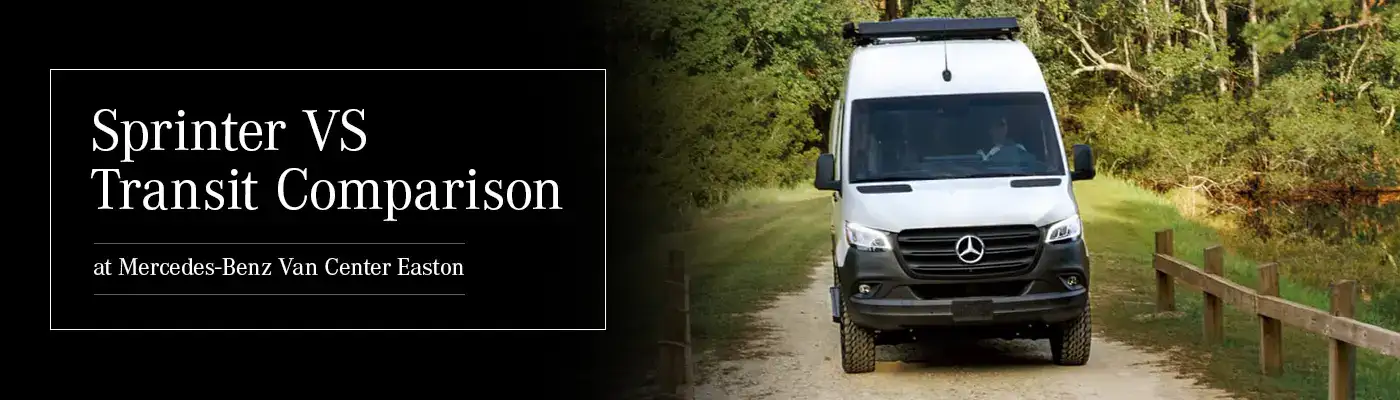
From professionals working in the trades to recreational enthusiasts chasing their next adventure, having the right van for the job is essential. Long gone are the days when full-size vans lacked the style, efficiency, technology, and premium standard features that today’s buyers demand. With plenty of choices available on the market, how can you be sure that you’re making the right purchasing decision for your specific needs?
Mercedes-Benz Sprinter vans continue to set the benchmark for the industry, evidenced by their extensive model range and class-exclusive features not found on the competition. Speaking of the competition, let’s take a closer look at exactly how well the proven Mercedes-Benz Sprinter van range stacks up against one of its top rivals – the Ford Transit. Who will take home the victory? Take a closer look at the details and decide for yourself!
Sprinter vs. Transit: Quick Answer
The Mercedes-Benz Sprinter is the stronger choice for buyers prioritizing diesel power, maximum payload and towing potential, factory configuration variety, premium technology, and longer maximum electric driving range. Its broader range of commercial, fleet, passenger, upfit, recreational, and electric configurations gives buyers more ways to build the van around demanding real-world requirements.
✓
Commercial Capability
Sprinter configurations reach higher maximum payload and towing ratings than the Transit figures compared here.
✓
More Factory Choices
Cargo, Crew, Passenger, Passenger Van Select, and Cab Chassis models support a wider range of missions.
✓
Diesel and Electric
Sprinter buyers can choose turbodiesel capability or an eSprinter with up to 206 miles of maximum range.
Mercedes-Benz Sprinter vs. Ford Transit at a Glance
The strongest differences become clear when capability, powertrain choice, flexibility, technology, and electric range are considered together.
Mercedes-Benz Sprinter
The comparison winner
- Current 4-cylinder turbodiesel power with standard- and high-output choices
- Up to 6,812 pounds of payload when properly configured
- Up to 7,500 pounds of towing when properly equipped
- Five core factory variants for more commercial and passenger applications
- MBUX multimedia technology and Mercedes-Benz connected resources
- Up to 206 miles of eSprinter range with the 113-kWh battery
Ford Transit
Key Transit limitations
- No current factory diesel option for buyers who prefer diesel torque
- Lower maximum payload in the configurations compared here
- Lower maximum towing than the Sprinter’s 7,500-pound ceiling
- Fewer core factory model types than the broader Sprinter range
- SYNC 4 instead of MBUX and the Mercedes-Benz ecosystem
- Up to 159 miles of E-Transit range compared with 206 miles for eSprinter
2026 Sprinter vs. Transit Comparison
The most important differences involve diesel availability, payload, towing, configuration variety, technology, and electric range. Exact specifications depend on body style, wheelbase, roof height, drivetrain, equipment, and upfit.
| Category | Mercedes-Benz Sprinter | Ford Transit | Advantage |
|---|---|---|---|
| Diesel Engine | 4-cylinder turbodiesel; standard- and high-output choices | Not available | Sprinter |
| High-Output Diesel | 211 hp / 332 lb-ft | Gasoline powertrains only | Sprinter |
| Maximum Payload | Up to 6,812 pounds | Up to 5,110 pounds | Sprinter |
| Maximum Towing | Up to 7,500 pounds | Up to 6,900 pounds | Sprinter |
| Core Factory Variants | 5: Cargo, Crew, Passenger, Passenger Van Select, Cab Chassis | 3: Cargo, Passenger, Chassis Cab | Sprinter |
| Infotainment | MBUX multimedia system | SYNC 4 | Sprinter |
| Maximum Electric Range | eSprinter: up to 206 miles* | E-Transit: up to 159 miles* | eSprinter |
Five Reasons the Mercedes-Benz Sprinter Beats the Ford Transit
Each advantage addresses a practical ownership question involving performance, productivity, technology, flexibility, or electrification.
Diesel Power and Commercial Torque
✓ Sprinter
Current 4-cylinder turbodiesel choices
✕ Transit
No current factory diesel option
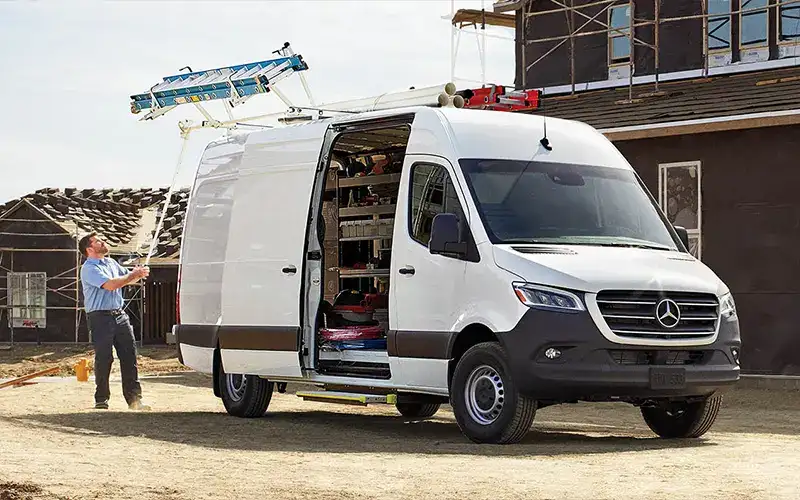
Having the muscle to tow, haul, and transport all of your gear and equipment is a fundamental component of van ownership. Often equally as important, buyers prefer to spend their hard-earned money on their business or to pursue their passion. Fuel efficiency is always paramount in addition to performance. One standout feature of the Mercedes-Benz Sprinter that you won’t find on the Ford Transit is its current 4-cylinder turbocharged diesel engine lineup. While Ford completely abandoned its diesel engine several years ago, Mercedes-Benz engineers have continued to take advantage of the low-end torque and long-route commercial characteristics associated with diesel power. The only way to enjoy these perks is to choose the Mercedes-Benz Sprinter instead of the Ford Transit.
Higher Payload Capacity
✓ Sprinter
4,211-lb base payload in the compared configuration
✕ Transit
3,685-lb base payload in the compared configuration
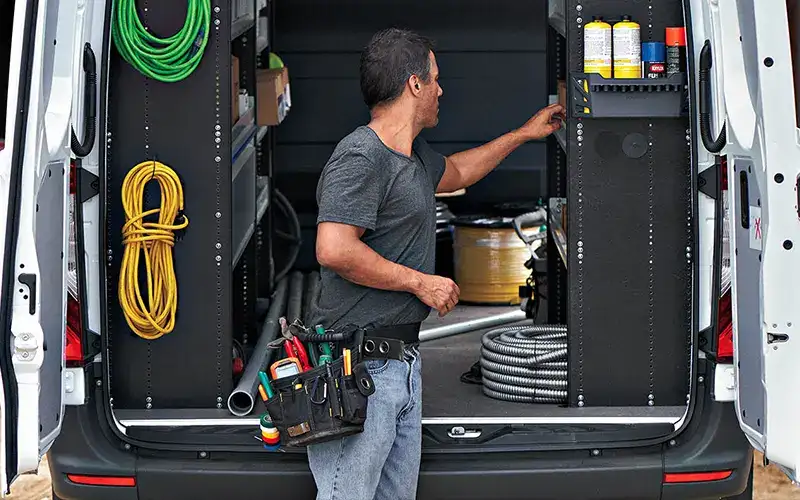
While we’ve briefly touched on the superior performance and efficiency of the Mercedes-Benz Sprinter Van already, you’ll also find plenty of noteworthy advantages over the rival Ford Transit when we compare payload ratings. Having the strength and flexibility to have all of your tools and equipment onboard when you need them the most is imperative. Thanks to expert engineering and meticulous attention to detail, the Mercedes-Benz Sprinter has a significantly higher standard payload capacity rating than the Ford Transit. We’re not just talking about a slight edge either. As a matter of fact, the Sprinter offers more than 500 pounds of additional payload capacity compared with the Transit in standard configurations. While your competition will have to make a second trip or pack lighter, your Mercedes-Benz Sprinter will help you get the job done right.
MBUX Technology Built Around the Driver
✓ Sprinter
MBUX and Mercedes-Benz connectivity
✕ Transit
SYNC 4; no MBUX ecosystem
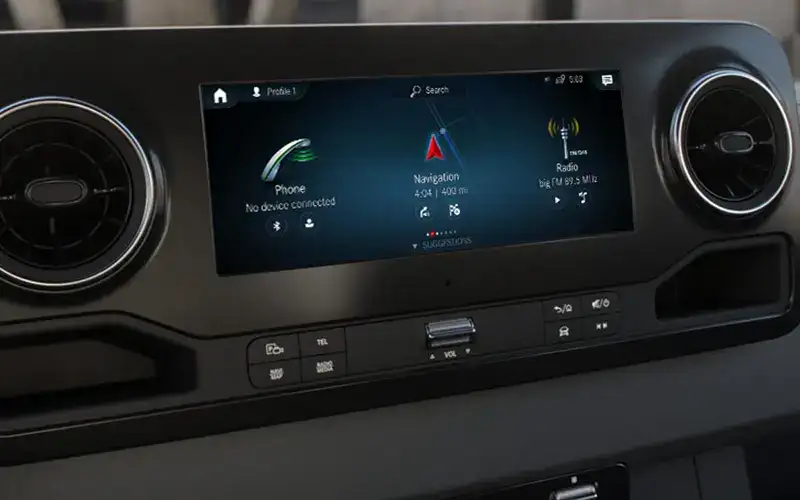
Whether it’s all about staying productive, informed, or entertained, in-van infotainment is another category that can make or break your experience behind the wheel. Fortunately, choosing the Mercedes-Benz Sprinter means you’ll receive the revolutionary Mercedes-Benz User Experience (MBUX) infotainment system as standard, regardless of model or trim level. Often recognized for its multimedia and connectivity features, the MBUX system has routinely received praise, recognition, and awards from top critics across the industry. From seamlessly smooth operation to innovative features like fleet management and telematics to real-time maintenance data access – both individuals and fleet owners agree that the MBUX is the gold standard for van infotainment.
More Models and More Ways to Upfit
✓ Sprinter
Five core factory variants plus extensive upfit support
✕ Transit
Fewer core factory body-style choices
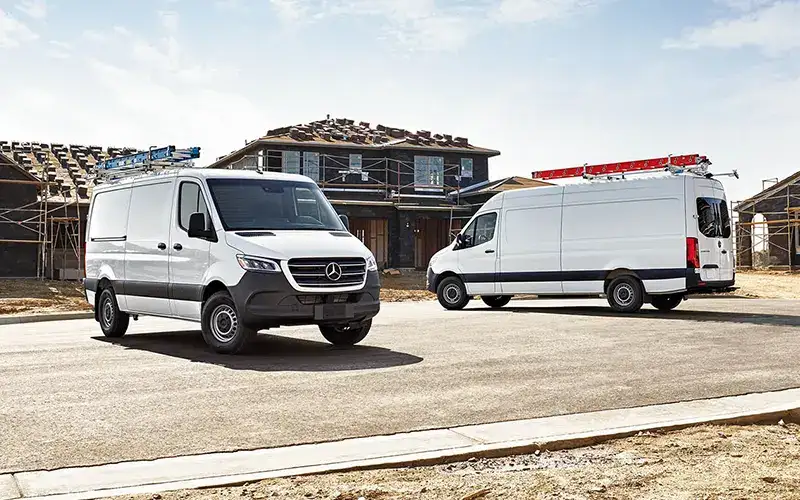
From the jobsite to the campsite, the Mercedes-Benz Sprinter Van offers a comprehensive selection of individual models and configurations designed to meet the needs of virtually every type of van buyer. While both the Sprinter and Ford Transit offer Cargo Van, Passenger Van, and Chassis Cab options – only Mercedes-Benz provides additional choices. For example, the Sprinter Crew Van offers the flexibility of carrying both cargo and passengers on the way to your destination. Additionally, Sprinter Passenger Van Select models offer several different wheelbase lengths, engine options, and individual features to further personalize your van exactly to your needs. When it comes to flexibility and personalization, the obvious choice is the Mercedes-Benz Sprinter.
Longer Maximum Electric Range
✓ Sprinter
81- or 113-kWh battery; up to 206 miles*
✕ Transit
Up to 159 miles of maximum range*
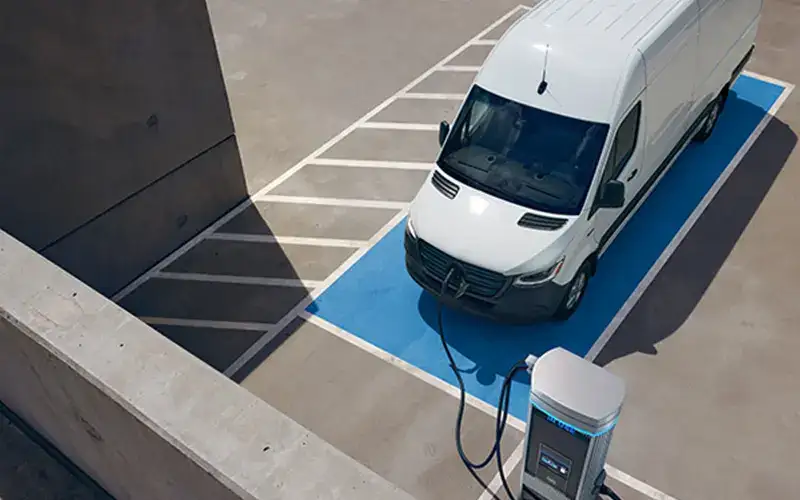
Embracing the benefits of electrification is a great way to enjoy superior efficiency and profitability. While both Mercedes-Benz and Ford build all-electric variants of the Sprinter and Transit, there are plenty of notable differences between the two. The cutting-edge eSprinter is available with two battery-capacity choices compared with a single primary battery configuration for the E-Transit. As a result, the eSprinter delivers a significantly higher maximum EV range rating compared to the E-Transit. That additional range allows you to work smarter and harder than your competition. Flexible charging solutions and the same robust strength found across the model range make the Mercedes-Benz eSprinter the better option for those interested in an all-electric van.
Which Van Is Better for Your Type of Work?
The answer depends on what the van must carry, where it will travel, and how it will be configured.
Trades & Heavy Equipment
Payload, diesel torque, towing, roof height, shelving, and jobsite organization favor the Sprinter for demanding trade applications.
Best fit: Sprinter
Delivery & Fleet Routes
Compare cargo dimensions, daily mileage, driver comfort, telematics, downtime, and fuel or charging access.
Edge: Sprinter flexibility
Passenger & Shuttle Use
Passenger Van and Passenger Van Select choices create multiple paths for group transport and premium conversions.
Best fit: Sprinter
Local Electric Operation
Route length, payload, charging schedule, weather, and reserve range should guide the electric-van decision.
Range edge: eSprinter
What Should You Compare Before Buying a Commercial Van?
- Payload after upfitting: Shelving, partitions, tools, passengers, accessories, and trailer tongue weight reduce remaining payload.
- Towing requirements: Confirm trailer weight, hitch equipment, GCWR, and the exact configuration rating.
- Wheelbase and roof: Balance cargo room and standing height against maneuverability, parking, and garage clearance.
- Powertrain: Compare diesel torque, AWD availability, electric range, and charging access.
- Route profile: Consider daily mileage, highway use, stop-and-go driving, hills, weather, and return-to-base charging.
- Service and uptime: Evaluate maintenance planning, parts access, fleet support, and downtime risk.
- Future growth: Choose a platform that can support a larger upfit, heavier workload, more passengers, or additional fleet units.
The most useful comparison is the exact Sprinter configuration versus the exact Transit configuration after the intended upfit and operating load are included.
Compare Sprinter Vans for Your Columbus-Area Business
Commercial vans operating around Columbus and Central Ohio may face dense delivery routes, interstate mileage, changing weather, equipment-heavy job sites, and long days behind the wheel. Mercedes-Benz Van Center Easton can help compare wheelbases, roof heights, diesel output, AWD availability, payload, towing, eSprinter battery choices, and upfit requirements before you commit to a van.
Browse new Sprinter inventory, explore pre-owned work vans, or review current offers.
Winner: Mercedes-Benz Sprinter

For van shoppers prioritizing demanding commercial capability, the Mercedes-Benz Sprinter is the clear overall winner of this comparison. Its diesel choices, higher maximum payload and towing figures, broad factory model range, upfit flexibility, MBUX technology, and longer maximum electric range give businesses more ways to build around real operating requirements.
Professionals seeking a van platform that can adapt as their workload, fleet, or business grows should place the Sprinter at the top of the test-drive list.
Continue Your Sprinter Van Research
Narrow down the exact wheelbase, dimensions, towing equipment, ownership plan, and upfit strategy.
Sprinter vs. Transit FAQs
Is the Mercedes-Benz Sprinter better than the Ford Transit?
The Sprinter is the stronger overall choice for buyers prioritizing diesel power, higher maximum payload and towing ratings, more factory model choices, upfit flexibility, MBUX technology, and longer maximum electric range.
Does the Ford Transit offer a diesel engine?
No current factory diesel engine is offered for the Ford Transit. The Mercedes-Benz Sprinter offers current 4-cylinder turbodiesel choices in standard-output and high-output forms.
Which van has the higher maximum payload capacity?
The Sprinter configurations compared here reach up to 6,812 pounds of payload, compared with up to 5,110 pounds for the Transit. Payload varies by wheelbase, roof, drivetrain, GVWR, equipment, and upfit.
Which van can tow more: Sprinter or Transit?
The Sprinter reaches up to 7,500 pounds of maximum towing capacity in this comparison, compared with up to 6,900 pounds for the Transit. Exact ratings depend on configuration and equipment.
Does the Mercedes-Benz Sprinter offer all-wheel drive?
Yes. High-output diesel AWD configurations are available in the Sprinter range. Availability depends on model, wheelbase, roof, and GVWR configuration.
Is the Sprinter better for upfitting?
The Sprinter is an excellent upfit platform because it offers several factory variants, multiple wheelbases and roof heights, high payload configurations, and support for commercial, passenger, recreational, mobile-business, and specialized conversions.
Which electric van has more range: eSprinter or E-Transit?
The eSprinter has the higher maximum range in this comparison. Its 113-kWh battery reaches up to 206 miles, compared with up to 159 miles for the E-Transit. Actual range varies with load, weather, speed, climate-control use, and driving style.
Is the Sprinter a good choice for Ohio businesses?
Yes. Sprinter configurations can support urban delivery, interstate travel, equipment-heavy work, passenger transport, electric return-to-base routes, and changing Ohio weather. Available AWD can add confidence for appropriate applications.
Can Mercedes-Benz Van Center Easton help configure a Sprinter?
Yes. Mercedes-Benz Van Center Easton can help compare Sprinter models, diesel output, AWD availability, wheelbases, roof heights, payload, towing, eSprinter batteries, inventory, financing, and upfit requirements.
*Prices, payload, towing, cargo capacity, powertrain availability, technology, model choices, and competitive specifications vary by model year, body style, wheelbase, roof height, GVWR, drivetrain, equipment, options, upfit, and manufacturer updates. Verify the specifications and pricing of the exact vehicle before purchase.
*eSprinter range figures are based on a full charge and testing consistent with U.S. EPA MCT drive-cycle methodology. Actual range varies with payload, driving style, road and traffic conditions, speed, outside temperature, climate-control use, battery age, and other factors.