

Mercedes-Benz Sprinter Size Guide: Dimensions, Cargo & Payload
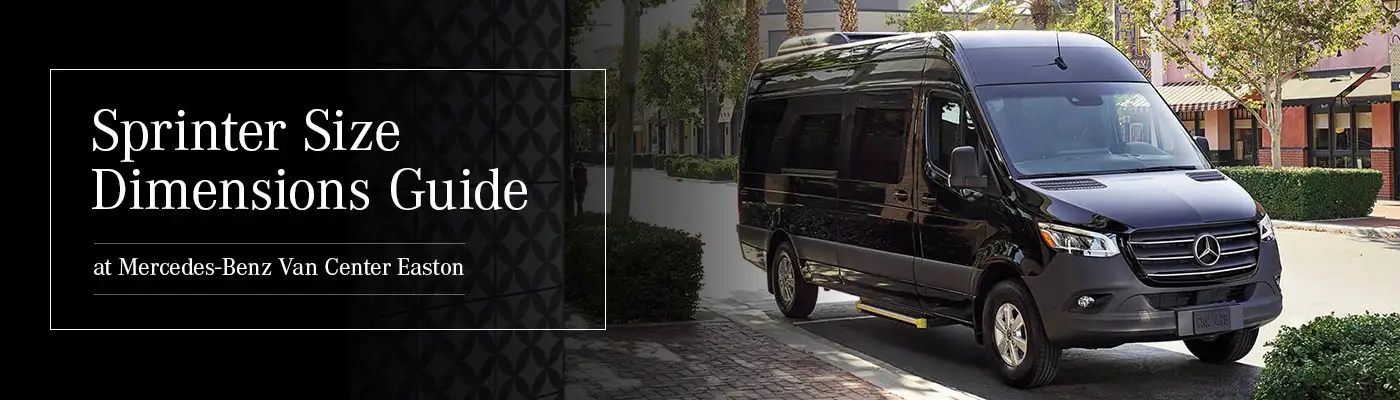
When every inch can have an impact on your bottom line, choosing the right commercial van for your trade, occupation, or business is essential. The Mercedes-Benz Sprinter lineup is engineered to go the distance while helping you carry everything you need to stay profitable and productive. Impressive payload ratings and cargo capacities are just two additional advantages that the Sprinter holds over the competition. Interested in learning more about how the Mercedes-Benz Sprinter range can maximize your efficiency? Check out this handy reference guide assembled by our team at the Mercedes-Benz Van Center Easton.
Sprinter Dimensions, Cargo and Payload: Quick Answer
Mercedes-Benz Sprinter Cargo Vans offer up to 533 cubic feet of cargo volume or up to 6,812 pounds of payload capacity, depending on the selected model, GVWR, roof height, wheelbase, drivetrain, engine, equipment, and body configuration. The 144-inch wheelbase provides the most compact footprint, the 170-inch wheelbase provides greater cargo-floor length, and the 170-inch extended body provides the greatest maximum cargo volume.
✓
Up to 533 Cubic Feet
The 170-inch extended high-roof Cargo Van provides the greatest maximum cargo volume in the configurations listed below.
✓
Up to 6,812 Pounds
The 144-inch Standard Roof Cargo Van 4500 provides the highest maximum payload rating listed in this guide.
✓
RWD and AWD Choices
Available drivetrain choices let buyers compare payload, traction, body size, operating environment, and upfit requirements.
Which Sprinter Size and Payload Configuration Is Right for You?
Begin with the dimensions of your cargo, completed upfit weight, required payload, route environment, standing-height needs, and desired drivetrain.
144-Inch Standard Roof
Best starting point for: Lower-clearance environments, urban work, compact upfits, and maximum payload configurations.
- Up to 319 cubic feet in listed 2500 models
- Up to 6,812 pounds of payload
- RWD and AWD availability
- Standard- and high-output diesel choices
144-Inch High Roof
Best starting point for: City-friendly dimensions with increased vertical room for standing, shelving, tools, and equipment.
- Up to 374 cubic feet in listed 2500 models
- Up to 6,735 pounds of payload
- RWD and AWD availability
- Compact wheelbase with high-roof utility
170-Inch High Roof
Best starting point for: Larger trade upfits, delivery routes, long shelving systems, mobile businesses, and bulky equipment.
- Up to 488 cubic feet in listed 2500 models
- Up to 6,382 pounds of payload
- RWD and AWD availability
- Strong balance of length and payload
170-Inch Extended
Best starting point for: Maximum-volume cargo, long interior builds, high-capacity delivery, specialty upfits, and conversions.
- Up to 533 cubic feet in listed 2500 models
- Up to 6,250 pounds of payload
- RWD and AWD availability
- Greatest maximum cargo volume
Sprinter Cargo Volume and Maximum Payload Compared
The maximum cargo-volume and maximum-payload figures in each row may come from different models. A single van does not necessarily combine both maximum figures.
| Body Configuration | Wheelbase | Maximum Listed Cargo Volume | Maximum Listed Payload | Primary Strength |
|---|---|---|---|---|
| Standard Roof | 144 inches | 319 cubic feet | 6,812 pounds | Maximum payload and lower exterior roof |
| High Roof, Standard Wheelbase | 144 inches | 374 cubic feet | 6,735 pounds | Compact length with increased vertical room |
| High Roof, Long Wheelbase | 170 inches | 488 cubic feet | 6,382 pounds | Balance of cargo length, volume, and capability |
| High Roof, Extended Body | 170 inches | 533 cubic feet | 6,250 pounds | Maximum cargo volume and floor length |
Cargo Volume vs. Payload Capacity
Cargo volume measures available space. Payload measures how much weight the van can carry. Both must match the intended operation.
Cargo Volume
Measured in cubic feet.
Cargo volume describes the three-dimensional space available inside the cargo area. It is especially relevant when carrying packages, furniture, bins, supplies, lightweight equipment, or bulky items that occupy significant space.
- Affected by wheelbase and body length
- Affected by roof height
- Affected by wheel housings and body configuration
- Reduced by shelving, partitions, tanks, cabinets, and other upfits
Payload Capacity
Measured in pounds.
Payload is the weight the van can carry after accounting for its own curb weight. It includes people and everything added to or carried by the van.
- Passengers and personal items
- Cargo, tools, equipment, and materials
- Shelving, partitions, racks, tanks, and upfits
- Hitch equipment and trailer tongue weight
How Is Sprinter Payload Calculated?
The published payload figure is based on a vehicle’s rated gross vehicle weight minus its base or configured vehicle weight. Every option and item added to the van can reduce the remaining payload available for passengers and cargo.
Example: A van may offer substantial interior room but still reach its payload limit before the cargo area is physically full. Heavy tools, water tanks, refrigeration systems, generators, batteries, shelving, and towing tongue weight can consume payload quickly.
What Changes Sprinter Cargo and Payload Ratings?
Two Sprinter Vans that look similar can have different capacity ratings because of their underlying configuration.
GVWR and Model
The 2500, 3500, 3500XD, and 4500 use different GVWR, axle, wheel, tire, chassis, and body configurations that affect payload.
Wheelbase and Body
Longer wheelbases and extended bodies provide more cargo room but add vehicle weight, which can affect the remaining payload.
Roof Height
A high roof increases vertical space and cargo volume, but the taller body can weigh more than the equivalent standard-roof configuration.
RWD vs. AWD
AWD equipment adds weight. As shown in the tables, otherwise comparable AWD models generally have lower listed payload than their RWD counterparts.
Options and Upfits
Seats, shelving, partitions, refrigeration, steps, hitches, batteries, tanks, generators, and accessories reduce remaining payload.
Passengers and Towing
Passenger weight and trailer tongue weight count toward the load carried by the van and reduce available cargo payload.
Mercedes-Benz Sprinter Cargo and Payload Ratings by Model
Compare MSRP, diesel output, cargo volume, payload, roof height, wheelbase, and drivetrain across the published configurations.
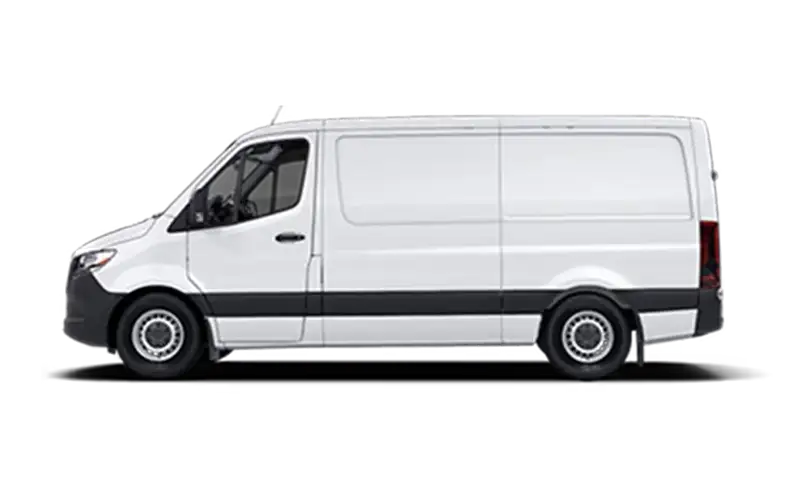
Standard Roof, 144-Inch Wheelbase
Configuration Highlights
- Up to 319 cubic feet of cargo volume
- Up to 6,812 pounds of payload
- RWD and AWD choices
- Standard- and high-output diesel availability
| Model | MSRP* | Engine | Cargo Volume | Payload Capacity |
|---|---|---|---|---|
| Cargo Van 2500 – 144-Inch Wheelbase, Standard Roof, RWD | $50,830 | 4-Cylinder Diesel, Standard Output | 319 cubic feet | 4,211 pounds |
| Cargo Van 2500, 144-Inch Wheelbase, Standard Roof, RWD | $53,680 | 4-Cylinder Diesel, High Output | 319 cubic feet | 4,211 pounds |
| Cargo Van 2500, 144-Inch Wheelbase, Standard Roof, AWD | $60,500 | 4-Cylinder Diesel, High Output | 319 cubic feet | 3,858 pounds |
| Cargo Van 3500, 144-Inch Wheelbase, Standard Roof, RWD | $56,950 | 4-Cylinder Diesel, High Output | 223 cubic feet | 4,699 pounds |
| Cargo Van 3500XD, 144-Inch Wheelbase, Standard Roof, RWD | $59,860 | 4-Cylinder Diesel, High Output | 281 cubic feet | 5,739 pounds |
| Cargo Van 3500XD, 144-Inch Wheelbase, Standard Roof, AWD | $66,680 | 4-Cylinder Diesel, High Output | 281 cubic feet | 5,411 pounds |
| Cargo Van 4500, 144-Inch Wheelbase, Standard Roof, RWD | $62,400 | 4-Cylinder Diesel, High Output | 281 cubic feet | 6,812 pounds |
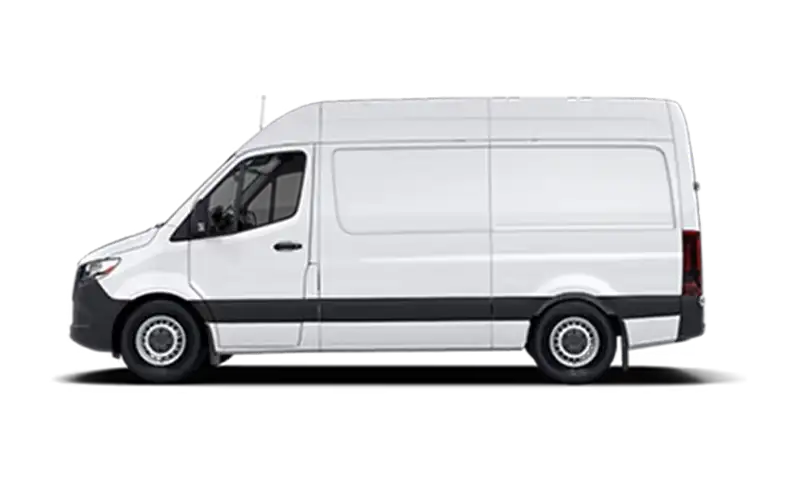
High Roof, 144-Inch Wheelbase
Configuration Highlights
- Up to 374 cubic feet of cargo volume
- Up to 6,735 pounds of payload
- RWD and AWD choices
- High-roof room with the shorter wheelbase
| Model | MSRP* | Engine | Cargo Volume | Payload Capacity |
|---|---|---|---|---|
| Cargo Van 2500, 144-Inch Wheelbase, High Roof, RWD | $54,380 | 4-Cylinder Diesel, Standard Output | 374 cubic feet | 4,134 pounds |
| Cargo Van 2500, 144-Inch Wheelbase, High Roof, RWD | $57,230 | 4-Cylinder Diesel, High Output | 374 cubic feet | 4,134 pounds |
| Cargo Van 2500, 144-Inch Wheelbase, High Roof, AWD | $64,050 | 4-Cylinder Diesel, High Output | 374 cubic feet | 3,781 pounds |
| Cargo Van 3500, 144-Inch Wheelbase, High Roof, RWD | $60,500 | 4-Cylinder Diesel, High Output | 329 cubic feet | 4,622 pounds |
| Cargo Van 3500XD, 144-Inch Wheelbase, High Roof, RWD | $63,410 | 4-Cylinder Diesel, High Output | 329 cubic feet | 5,622 pounds |
| Cargo Van 3500XD, 144-Inch Wheelbase, High Roof, AWD | $70,230 | 4-Cylinder Diesel, High Output | 329 cubic feet | 5,353 pounds |
| Cargo Van 4500, 144-Inch Wheelbase, High Roof, RWD | $64,500 | 4-Cylinder Diesel, High Output | 281 cubic feet | 6,735 pounds |
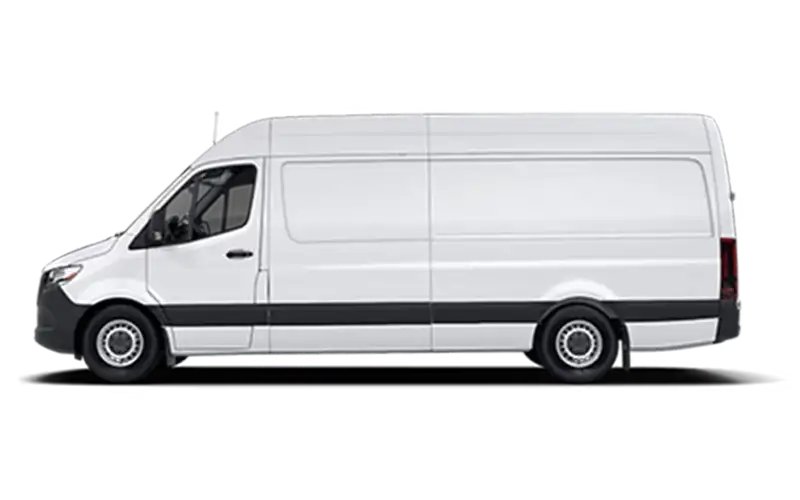
High Roof, 170-Inch Wheelbase
Configuration Highlights
- Up to 488 cubic feet of cargo volume
- Up to 6,382 pounds of payload
- RWD and AWD choices
- Longer cargo floor without the extended rear body
| Model | MSRP* | Engine | Cargo Volume | Payload Capacity |
|---|---|---|---|---|
| Cargo Van 2500, 170-Inch Wheelbase, High Roof, RWD | $57,540 | 4-Cylinder Diesel, Standard Output | 488 cubic feet | 3,814 pounds |
| Cargo Van 2500, 170-Inch Wheelbase, High Roof, AWD | $60,390 | 4-Cylinder Diesel, High Output | 488 cubic feet | 3,450 pounds |
| Cargo Van 3500, 170-Inch Wheelbase, High Roof, RWD | $63,660 | 4-Cylinder Diesel, High Output | 430 cubic feet | 4,269 pounds |
| Cargo Van 3500XD, 170-Inch Wheelbase, High Roof, RWD | $66,570 | 4-Cylinder Diesel, High Output | 430 cubic feet | 5,309 pounds |
| Cargo Van 3500XD, 170-Inch Wheelbase, High Roof, AWD | $73,430 | 4-Cylinder Diesel, High Output | 430 cubic feet | 5,000 pounds |
| Cargo Van 4500, 170-Inch Wheelbase, High Roof, RWD | $69,110 | 4-Cylinder Diesel, High Output | 430 cubic feet | 6,382 pounds |
High Roof, 170-Inch Extended Body
Configuration Highlights
- Up to 533 cubic feet of cargo volume
- Up to 6,250 pounds of payload
- RWD and AWD choices
- Maximum listed interior cargo volume
| Model | MSRP* | Engine | Cargo Volume | Payload Capacity |
|---|---|---|---|---|
| Cargo Van 2500, 170-Inch Extended Wheelbase, High Roof, RWD | $59,980 | 4-Cylinder Diesel, Standard Output | 533 cubic feet | 3,704 pounds |
| Cargo Van 2500, 170-Inch Extended Wheelbase, High Roof, RWD | $62,830 | 4-Cylinder Diesel, High Output | 533 cubic feet | 3,704 pounds |
| Cargo Van 2500, 170-Inch Extended Wheelbase, High Roof, AWD | $69,650 | 4-Cylinder Diesel, High Output | 533 cubic feet | 3,351 pounds |
| Cargo Van 3500, 170-Inch Extended Wheelbase, High Roof, RWD | $66,100 | 4-Cylinder Diesel, High Output | 469 cubic feet | 4,148 pounds |
| Cargo Van 3500XD, 170-Inch Extended Wheelbase, High Roof, RWD | $69,010 | 4-Cylinder Diesel, High Output | 469 cubic feet | 5,188 pounds |
| Cargo Van 3500XD, 170-Inch Extended Wheelbase, High Roof, AWD | $75,830 | 4-Cylinder Diesel, High Output | 469 cubic feet | 4,879 pounds |
| Cargo Van 4500, 170-Inch Extended Wheelbase, High Roof, RWD | $71,550 | 4-Cylinder Diesel, High Output | 469 cubic feet | 6,250 pounds |
How to Choose the Right Sprinter Cargo and Payload Rating
Use actual cargo measurements and completed vehicle weight rather than choosing solely from the largest published number.
Measure the Cargo
Record the length, width, height, shape, and loading orientation of the largest items the van must carry.
Calculate Upfit Weight
Include shelving, partitions, racks, tanks, flooring, generators, batteries, refrigeration, steps, hitches, and accessories.
Add People and Supplies
Account for drivers, passengers, tools, spare parts, fluids, personal items, inventory, and everything carried during a normal workday.
Evaluate the Route
Consider parking, loading docks, alleys, garage clearance, turning room, road conditions, snow, jobsite access, and highway use.
Choose RWD or AWD
Compare the traction benefits of AWD with its additional vehicle weight and the resulting reduction in listed payload.
Leave a Working Margin
Avoid building a van that must operate at its maximum rating every day. Allow capacity for business growth and changing loads.
Sprinter Loading and Payload Best Practices
A large cargo area is only useful when the load is secure, correctly distributed, and within every vehicle rating.
Do This
- Use the payload rating for the exact vehicle
- Weigh the completed van after upfitting
- Distribute cargo between the axles
- Secure tools, equipment, and freight properly
- Check tire pressure and load ratings
- Include passengers and tongue weight in payload
- Reweigh the van when the upfit or normal load changes
Avoid This
- Assuming cargo volume and payload are the same measurement
- Using the highest lineup rating for every Sprinter
- Ignoring the weight of shelves and accessories
- Loading all heavy cargo behind the rear axle
- Exceeding GVWR, axle, tire, or hitch limits
- Choosing a body too long for daily operating conditions
- Operating without confirming the completed vehicle weight
Shop New Sprinter Vans at Mercedes-Benz Van Center Easton
Now that you’ve seen just how capable the Mercedes-Benz Sprinter lineup is, it’s time to find the right match for your specific needs. Our team of commercial van experts is standing by to help you choose the Sprinter that’s ready to help you get the job done.
With up to 533 cubic feet of maximum cargo volume and up to 6,812 pounds of maximum payload capacity across the configurations listed in this guide, the Sprinter lineup provides choices for trades, delivery operations, fleet use, mobile businesses, specialized equipment, and recreational conversions.
Bring us your cargo dimensions, estimated upfit weight, daily load, towing needs, route conditions, and preferred body size. Our team can help compare the exact model, GVWR, wheelbase, roof, drivetrain, engine output, cargo space, and payload rating.
Configure a Sprinter Van for Your Columbus-Area Business
Commercial vans operating throughout Columbus and Central Ohio may encounter downtown delivery routes, suburban service calls, interstate travel, winter weather, loading docks, equipment-heavy jobsites, and long operating days. Those conditions can affect the ideal wheelbase, roof height, drivetrain, payload rating, and upfit.
Browse new Sprinter inventory, review current Sprinter offers, or continue your research using the guides below.
Continue Your Sprinter Research
Compare wheelbases, towing, upfitting, maintenance, competitors, and used-van considerations before selecting a configuration.
Sprinter Dimensions, Cargo and Payload FAQs
What is the maximum cargo volume of a Mercedes-Benz Sprinter?
The greatest cargo-volume figure listed in this guide is 533 cubic feet for a Sprinter Cargo Van 2500 with a 170-inch extended body and high roof. Cargo volume varies by model, roof, wheelbase, drivetrain, body, and configuration.
What is the maximum payload capacity of a Mercedes-Benz Sprinter?
The highest payload figure listed in this guide is 6,812 pounds for the Cargo Van 4500 with a 144-inch wheelbase, Standard Roof, high-output diesel engine, and rear-wheel drive. Payload varies by exact configuration and equipment.
What is the difference between cargo volume and payload?
Cargo volume measures available interior space in cubic feet. Payload measures the weight the van can carry in pounds, including passengers, cargo, tools, upfit equipment, accessories, and trailer tongue weight.
Which Sprinter has the highest payload?
Among the configurations listed here, the Sprinter Cargo Van 4500 with a 144-inch wheelbase, Standard Roof, high-output diesel engine, and rear-wheel drive has the highest payload at 6,812 pounds.
Which Sprinter has the most cargo space?
The 170-inch extended high-roof Sprinter Cargo Van 2500 provides the greatest maximum cargo volume in this guide at 533 cubic feet.
Does AWD reduce Sprinter payload capacity?
AWD equipment adds vehicle weight. In the comparable configurations listed in this guide, AWD models generally have lower payload ratings than their rear-wheel-drive counterparts.
Does an upfit reduce Sprinter payload?
Yes. Shelving, partitions, racks, tanks, refrigeration, batteries, generators, flooring, steps, hitches, seats, and other installed equipment add weight and reduce the remaining payload available for passengers and cargo.
Does trailer tongue weight count against Sprinter payload?
Yes. Trailer tongue weight is carried by the van and must be included when calculating available payload, along with passengers, cargo, upfit equipment, hitch components, and accessories.
How do I know the payload of a specific Sprinter?
Review the ratings and labels for the exact vehicle, including its GVWR, configured weight, axle ratings, tire ratings, and equipment. Weighing the completed van after upfitting provides the most useful basis for calculating remaining payload.
Can Mercedes-Benz Van Center Easton help me choose a Sprinter size?
Yes. Mercedes-Benz Van Center Easton can help compare Sprinter models, GVWR, wheelbases, roof heights, cargo volume, payload, RWD and AWD, engine output, towing, inventory, and upfit requirements for a business or personal application.
*Base MSRP excludes transportation and handling charges, destination charges, taxes, title, registration, preparation and documentary fees, tags, labor and installation charges, insurance, and optional equipment, products, packages, and accessories. Actual vehicle price may vary by dealer.
*Cargo volume, payload, dimensions, GVWR, drivetrain availability, engine availability, pricing, towing, and equipment vary by model year, model, wheelbase, roof height, body configuration, drivetrain, options, upfit, passengers, and installed equipment. Maximum cargo volume and maximum payload may be achieved by different configurations and should not be assumed to occur together. Verify the specifications and load limits of the exact vehicle before purchase or upfitting.