

Sprinter 2500 vs. 3500 vs. 4500: Which Work Van Do You Need?
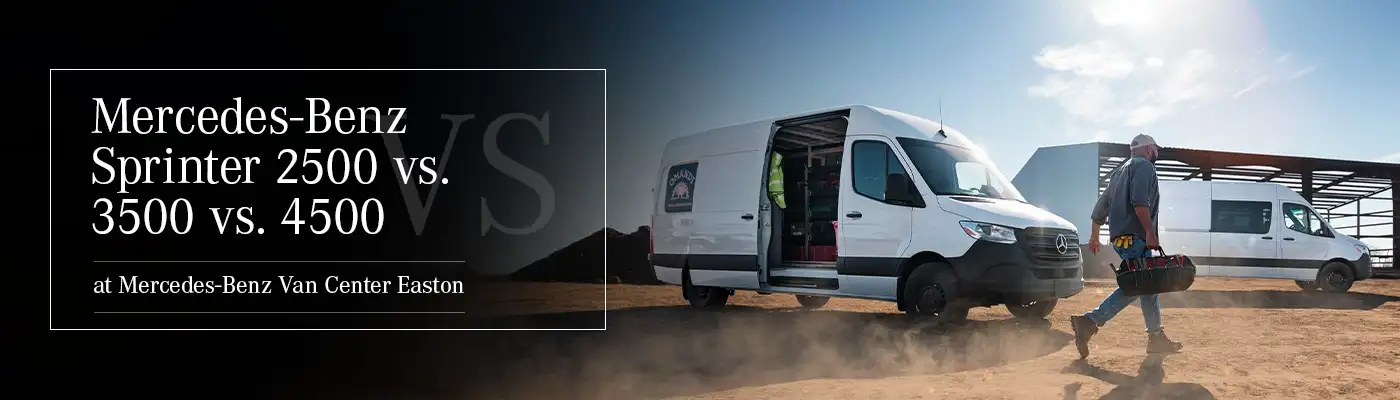
Many businesses in Westerville, Gahanna, and all over the Columbus area have found it essential to purchase a dedicated cargo van at some point, either as a condition of getting started, or in order to accelerate their growth well beyond the stage of pickup trucks and personal vehicles. And, simply put, there is no better cargo van on the market than the Mercedes-Benz Sprinter, and no better partner than Mercedes-Benz Van Center Easton.
What sets the Sprinter apart? For one thing, they’re built with classic Mercedes-Benz German engineering, ensuring that it will serve you capably for years to come, instead of adding one more headache to your job. Essential safety and tech features are also standard in the Sprinter, including Active Brake Assist, the Mercedes-Benz User Experience (MBUX) Touchscreen that keeps you fully connected on the road, and an unmatched ability to customize everything, from paint color to roof height, to match your business’ needs.
That customization, in many ways, begins with choosing the proper class of Sprinter from four options, including the 2500, 3500, 3500XD, and 4500. Which is right for you? That might sound like an unanswerable question at this stage, but let’s examine the facts so we can start to drill things down a bit.
Sprinter 2500 vs. 3500 vs. 4500 Comparison

The primary difference between the Mercedes-Benz Sprinter 2500, 3500, and 4500 classes lies in how much weight they’re built to handle, though there are a few other considerations like engine output, the availability of all-wheel drive, and towing capacity.
| 2500 | 3500 | 3500XD | 4500 | |
|---|---|---|---|---|
| Standard Engine | 2.0L I-4 diesel standard output | 2.0L I-4 diesel high output | 2.0L I-4 diesel high output | 2.0L I-4 diesel high output |
| Standard Horsepower | 170 | 211 | 211 | 211 |
| Available AWD | Yes | No | Yes | No |
| Rear Wheels | Single | Double | Double | Double |
| GVWR | 9,050 pounds | 9,990 pounds | 11,030 pounds | 12,125 pounds |
| Payload Capacity | 3,351-4,211 pounds | 4,148-4,699 pounds | 4,879-5,739 pounds | 6,250-6,812 pounds |
| Max. Towing Capacity | 5,000 pounds | 7,500 pounds | 7,500 pounds | 7,500 pounds |
Sprinter Class Cargo Considerations
One nice thing about the Mercedes-Benz Sprinter, compared to most alternatives, is that choosing a class doesn’t limit dimensional availability. Many cargo van manufacturers, for example, will limit the shortest wheelbases and lowest roof heights to the lower weight classes. Not so with the Sprinter; no matter which class you select, you’ll have the identical choice of a 144-inch, 170-inch, and 170-inch extended wheelbase, as well as the option of a standard or a high roof on the 144-inch configuration (a high roof is standard on the other lengths).
Determining Which Sprinter is Right For Your Business
Mercedes-Benz designs each Sprinter van with a specific workload in mind, and it’s vital to consider its eventual use when choosing. That means carefully researching and evaluating your payload and towing requirements — not just as they exist today, but over the next several years as well. So, while these general guidelines can help provide a reasonable reference point, ultimately, each individual and each business has unique needs.
Who Should Choose the Sprinter 2500
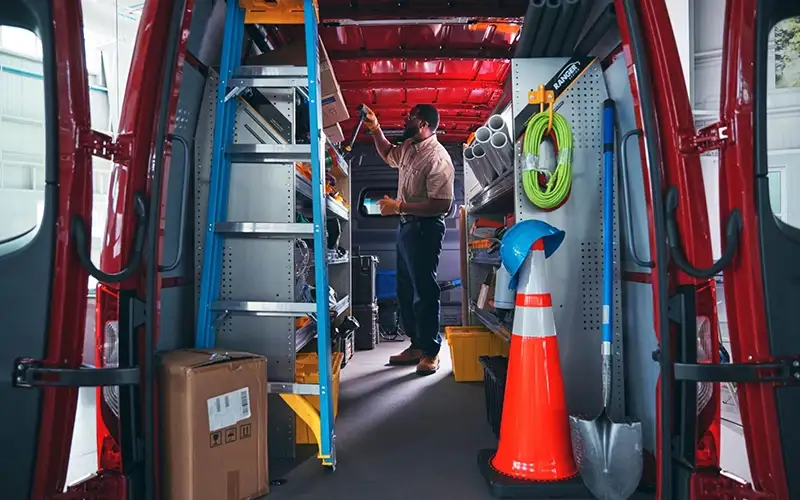
Typically speaking, the Sprinter 2500 class will meet the needs of the vast majority of service trades and mobile businesses, including plumbers, HVAC technicians, electricians, and contractor fleets. For instance, a typical residential HVAC setup, including tools, refrigerant, spare parts, and the necessary upfit shelving and storage averages between 1,200 and 1,800 pounds, well under the 2500’s payload capacity. Plumbing setups are even lighter, with most falling 450 and 1,200 pounds when including tools, shelving, and inventory. Other types of businesses, including mobile dog groomers and healthcare outlets, similarly don’t generally require enough capacity to place any stress on the 2500.
Who Should Choose the Sprinter 3500
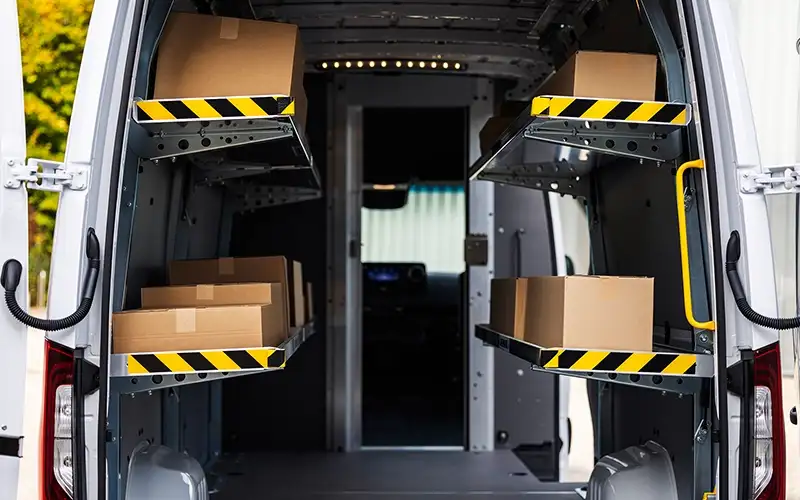
If you’re carrying a weightier payload, it might be worthwhile to consider the Sprinter 3500. That could be the case if a particularly elaborate (and heavy, obviously) upfit is in the plans, but even tradespeople might opt for the 3500 in situations where they’re working on larger jobs, carrying heavier equipment, or need the extra towing capacity that the 3500 offers. The most frequent users of the 3500, however, are last-mile delivery services, given that the cargo area of vans used in those businesses is often packed with packages with unpredictable weights. For a little extra support, the 3500XD offers extra capacity, as well as all-wheel drive.
Who Should Choose the Sprinter 4500
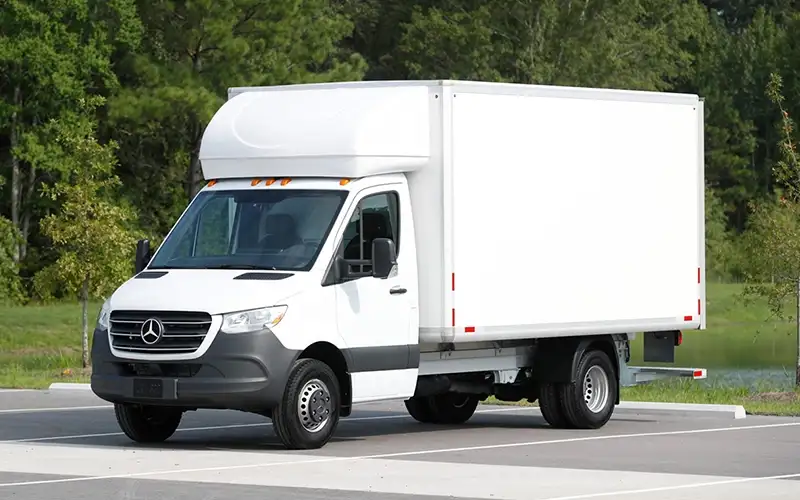
The Sprinter 4500 is used for more specialized commercial needs and extremely-heavy upfits, with box trucks and refrigerated bodies standing as two of its more common applications (though it’s also a favorite for some non-work uses, including luxury RVs and camper vans). Refrigerated bodies, of course, are necessary for businesses like those involving dairy, floral, pharmaceutical, and grocery transport, while a standard box truck is commonly used in furniture and appliance delivery, e-commerce returns, and moving operations.
Find the Perfect Sprinter Van in Columbus, OH
Still a little bit unsure as to whether the 2500, 3500, 3500XD, or 4500 best meets your needs? That’s okay! The professionals at Mercedes-Benz Van Center Easton are here for the hardworking people of Central Ohio and beyond, including a large selection of all Sprinter classes and sizes, and the decades of expertise needed to answer your questions and help take your business to the next level. Stop by or get in touch today to get started!